The program overview below is provisional and will be updated as planning proceeds. Please check this page regularly. [printfriendly]
Wednesday 21st November 2018
| 0830-0900 | Workshop Registration & arrival tea and coffee | |
| Pre-Conference Workshops: CLICK HERE FOR FULL DESCRIPTIONS | ||
| A selection of pre-conference workshops will be held on the Wednesday prior to the start of the congress. These workshops are an additional cost to attend. To submit an application to facilitate a workshop visit the abstract submission page. Submissions close Wednesday 11th July 2018.
Book a workshop during the registration process. Delegates and Non-Delegates are welcome to attend:
|
||
| Workshop 1 – Chancellor 6 | Workshop 2 – Harbour View Room 2 | |
| 0900-1230 | Confidentiality and litigation – when worlds collide Judge Joe Harman Many professionals are bound by duties of confidentiality or fidelity to their clients. The foundations of such duties are diverse and include religious belief, protection of the efficient operation of institutions fundamental to society and therapeutic benefit. The law protects a number of confidential relationships through evidential “privileges” such as religious confessional privilege, journalistic source privilege and legal professional privilege. Many, but not all, of these evidential privileges are under attack. Click here for full description. |
Memories of childhood sexual abuse as evidence Professor Jane Goodman-Delahunty, Professor Mark Nolan Co-authors of a review commissioned by the Royal Commission into Institutional Responses to Child Sexual Abuse of contemporary scientific research on complainant’s memory will present research highlights for forensic and legal practitioners. The workshop offers an empirical basis to assist criminal justice professionals to evaluate memories of childhood sexual abuse. The findings apply to cases of child sexual abuse as well as other matters where memory is crucial evidence in legal settings. Click here for full description. |
| 1230-1300 | A light lunch is provided for workshop attendees | |
| Workshop 3 – Chancellor 6 | Workshop 4 – Harbour View Room 2 | |
| 1300-1630 | Dos, dont’s and getting your message across: Expert report writers in court Andrew George, Josh Taaff, Dr Michael FitzGerald The aim of the workshop is to consider the different type of expert reports commonly used in criminal proceedings and discuss what criminal defense lawyers are looking for. The workshop will also explore the skills expert report writers need when giving evidence in court. It will include opportunities to put some of those skills and tips into practice during the workshop. It will be of great relevance to those new to the field as well as experienced report writers. Click here for full description. |
Assessing sexual sadism using structured behavioural guidelines Dr Rajan Darjee This workshop will give an overview of sexual sadism, its implications for risk assessment, treatment and case management. It will also give a detailed overview of the SeSaS and provide training in how to use this measure. Case studies will be used to apply the learning and the guidelines to practice. Practitioners will go away with a tool allowing for the better identification and assessment of sexual sadism. Click here for full description. |
| Free Evening | ||
Thursday 22nd November 2018
| 0730-1600 | Speakers Preparation Room Open | Mezzanine | |||
| 0800-1700 | Registration Open | Mezzanine | |||
| OPENING PLENARY | Grand Ballroom 2/3 Chair: Vincenzo Caltabiano |
||||
| 0900-0930 | Welcome to Country | Kartanya Maynard, Tasmanian Aboriginal Community member Official Opening | Her Excellency, Professor the Honourable Kate Warner, Governor of Tasmania Congress Welcome | Vincenzo Caltabiano & Yvonne Golder, Congress Co-Convenors |
|||
| 0930-1030 | 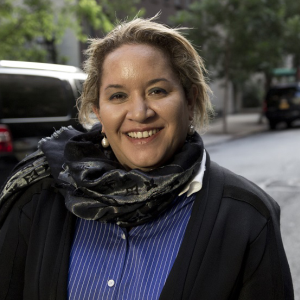 Keynote Speaker: Professor Megan Davis Keynote Speaker: Professor Megan DavisThe Uluru Statement from the Heart: Can Australia rise the challenge set down by First Nations at Uluru? Professor Megan Davis is Pro Vice Chancellor Indigenous and Professor of Law, UNSW. Prof Davis is an expert member of the United Nations Human Rights Council’s Expert Mechanism on the Rights of Indigenous Peoples. Prof Davis is a constitutional lawyer who was a member of the Referendum Council and the Expert Panel on the Recognition of Aboriginal and Torres Strait Islander Peoples in the Constitution. Full biography. |
|||
| 1030-1100 | Morning Tea | Mezzanine | |||
| CONCURRENT SESSION A | ||||
| CHILD PROTECTION Grand Ballroom 1 | Chair: Vincenzo Caltabiano |
SPECIAL POPULATIONS Grand Ballroom 2 | Bree Wyeth |
MENTAL HEALTH Grand Ballroom 3 | Chair: Yvonne Golder |
HOMICIDE Harbour View 1 | Chair: Troy McEwan |
|
| 1100-1125 | “Best interests of the child”: Inter-professional communication in the context of child protection in the courts Kim Tomlian |
The diversity and nature of offending in people with intellectual disability Dr Margaret Nixon |
Forensic mental health services in Tasmania Dr Leila Kavanagh |
Pathways to homicide: A case linkage analysis of mental health and offending precursors of homicide offenders in Victoria Dr Benjamin Spivak |
| 1130-1155 | Sentinel Event or business as usual? Removing children from parents with substance abuse problems Dr Karen Fisher, Dr Sabrina Hasanoui |
The quest for certainty: Predictive algorithms, risk and preventive justice Professor Bernadette McSherry |
Striding rather than limping: Lessons from Canada on compensating negligently occasioned mental harm Dr Tina Popa |
Sexual homicide: Implications of recent research for theory and practice Dr Raj Darjee |
| 1200-1225 | Lessons not learnt are doomed to be repeated: The case of BS, a death in out of home care Dr Karen Fisher |
Features of Australian Islamic State-inspired terrorists Dr Russ Scott |
Streamlining the first-tier tribunal (mental health). Will it promote justice, fairness and patient rights? Carole Burrell |
Epidemiology and clinical features of homicide Professor Olav Nielssen |
| 1230-1255 | Non-legal advocacy in involuntary mental health Dr Chris Maylea |
Is ‘house arrest’ authorised under a Community Treatment Order regime? Professor John Dawson |
||
| 1300-1400 | Lunch | Mezzanine | |||
| CONCURRENT SESSION B | ||||
| CHILD SEXUAL ABUSE Grand Ballroom 1 | Chair: Sam van der Wijngaart |
FAMILY VIOLENCE Grand Ballroom 2 | Chair: Loene Howes |
MENTAL HEALTH Grand Ballroom 3 | Chair: Mark Nolan |
MURDER AND DEMENTIA SYMPOSIUM Harbour View 1 | Chair: Amee Baird |
|
| 1400-1425 | Determinants of sentencing for child pornography related offending Dr David Tuck |
Improving police prevention of severe family violence using structured risk assessment and management A/Professor Troy McEwan |
Administrative burdens and the anti-therapeutic effects of mental health legislation: A legal-psychological framework and preliminary analysis Dr Stephen Tang |
Murder and dementia: An exploration of legal and neuropsychological factors of Australian cases Dr Amee Baird, Professor Jeanette Kennett, Dr Elizabeth Schier |
| 1430-1455 | Similarities in modi operandi of institutional and non-institutional child sexual offending: Systematic case comparisons Natalie Martschuk |
How accurate are police officers at predicting domestic violence with a structured professional judgement tool? An experimental, scenario-based study Professor Mark Kebbell |
Regulating the restraint of women in mental health and disability services settings: Designing gender-sensitive laws and guidelines for minimising and eliminating the use of restraint across sectors Dr Yvette Maker |
|
| 1500-1525 | Sexual abuse in juvenile detention Dr Christopher Lennings |
Safety first: A new Dutch approach to policing ex-partner stalking Cleo Brandt |
Sins, reflections, and directions: A Tasmanian case study Dr David Tuck |
|
| 1530-1600 | Afternoon Tea | Mezzanine | |||
| PLENARY SESSION | Grand Ballroom 2/3 Chair: Loene Howes |
||||
| 1600-1700 | 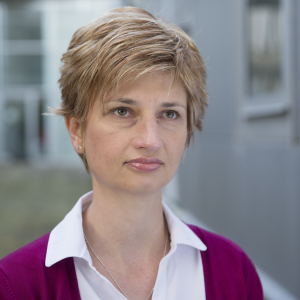 Keynote Speaker: Professor Theresa Gannon Keynote Speaker: Professor Theresa GannonDoes treatment for sexual offending work? What factors are important? Theresa is Professor of Forensic Psychology and Director of the Centre for Research and Education in Forensic Psychology (CORE-FP) at the University of Kent, UK. Theresa also works as a Practitioner Consultant Forensic Psychologist specializing in sexual offending and firesetting for the Forensic and Specialist Care Group, Kent and Medway Partnership Trust. Full biography. |
|||
| 1700 | Day concludes | |||
| 1740 | Board coaches for Government House from the Campbell St side of the Hotel Grand Chancellor | |||
| 1800-1900 | 
Government House Reception Generously hosted by Her Excellency, Professor the Honourable Kate Warner, Governor of Tasmania and Mr Warner. There is no cost to attend this function, however you must indicate your interest in attending the reception during the registration process. Numbers are limited and we cannot guarantee an invitation to delegates that register after the close of early bird on the 4th October 2018.
|
|||
| 1900 | Coaches depart Government House to return delegates to the Hotel Grand Chancellor | |||
Friday 23rd November 2018
| 0800-1530 | Speakers Preparation Room Open | Mezzanine | |||
| 0800-1630 | Registration Open | Mezzanine | |||
| PLENARY | Grand Ballroom 2/3 Chair: Troy McEwan |
||||
| 0900-1000 | Keynote Speaker: Professor Theresa Gannon The clinical needs of adult firesetters Theresa is Professor of Forensic Psychology and Director of the Centre for Research and Education in Forensic Psychology (CORE-FP) at the University of Kent, UK. Theresa also works as a Practitioner Consultant Forensic Psychologist specializing in sexual offending and firesetting for the Forensic and Specialist Care Group, Kent and Medway Partnership Trust. Full biography. |
|||
| 1000-1030 | Morning Tea | Mezzanine | |||
| CONCURRENT SESSION C | ||||
| YOUNG OFFENDERS Grand Ballroom 1 | Luke Bartlett |
VIOLENCE & AGGRESSION Grand Ballroom 2 | Chair: Troy McEwan |
MENTAL HEALTH Grand Ballroom 3 | Chair: Michael Guerzoni |
DETENTION Harbour View 1 | Bernadette McSherry |
|
| 1030-1055 | Young peoples understanding of the Youth Justice System in New Zealand Phillippa Dean |
The role of aggression-related early maladaptive schemas and schema modes in aggression in a prisoner sample Dr Ashley Dunne |
Keeping people with mental illness out of the criminal justice system by addressing a broad range of issues in a therapeutic court Dr Adam Brett |
The UNCRPD – do I look bothered? Dr Justin Barry-Walsh |
| 1100-1125 | Juvenile firesetters as multiple problem youth with particular interests in fire: Results from a meta-analysis across 39 independent samples Danielle Perks, A/Professor Bruce Watt |
A prospective real world validation of the Risk for Sexual Violence Protocol (RSVP) Dr Raj Darjee |
Understanding insight: An exploratory study of insight in a forensic psychiatric inpatient setting Fiona Black |
Preventive detention – unlawful arbitrary detention Dr Tony Ellis |
| 1130-1155 | Assessment and treatment of young offenders: How far have we come and where are we heading? Dr Clare Calvert |
A cumulative behavioural scale for identifying non-sadistic ritualistic rape Dr Michael Davis |
Insanity defence reform – can empirical research influence legal change? Professor Ronnie Mackay |
“Is this to be their fate for the indefinite future?” Judicial interest in systemic issues in Queensland Niamh Fields |
| 1200-1225 | The future of youth offender rehabilitation: Applying the Good Lives Model to youth offenders Dr Clare-Ann Fortune |
Criminogenic profile of violent female offenders incarcerated in Western Australian prisons Menna Gower |
Adaptation pathologised: ‘Adjustment Disorder’ and its consequences Dr Eric Ratcliff |
Post-sentence detention of terrorists: From Sins of the Past to predicting future risk in three new Australian regimes Professor Mark Nolan |
| 1230-1330 | Lunch | Mezzanine | |||
| CONCURRENT SESSION D | ||||
| CHILD SEXUAL ABUSE Grand Ballroom 1 | Chair: Mark Kebbell |
LAW ENFORCEMENT Grand Ballroom 2 | Luke Bartlett |
ALTERNATIVE APPROACHES Grand Ballroom 3 | Chair: Liz Moore |
||
| 1330-1355 | A study of clergymen and lay teachers charged with sexual offences against children Professor Olav Nielssen |
Working in policing and legal contexts: What kinds of ethical dilemmas do interpreters face? Dr Loene Howes |
Forensic psychological assessment of Aboriginal & Torres Strait Islander people Dr Bob Montgomery |
|
| 1400-1425 | The sacrament of confession and child sexual abuse: Reported practise of Tasmanian Anglican clergy navigating the confidentiality dilemma Mike Guerzoni |
Removing stubborn stains from the crime scene: Should the state play a role in lessening disgust? Gregory Dale |
Past sins through the lenses of guilt, shame and violence: Can therapeutic jurisprudence help? Dr Warren Brookbanks |
|
| 1430-1455 | Policy change in the world of the silent victim Katalin Kraszlan |
Misidentification of a person as a familiar person and reliability of eyewitness identification Professor Yuji Itoh |
Japanese style of therapeutic jurisprudence: How can we put the new wine into the old bottle? Professor Makoto Ibusuki |
|
| 1500-1530 | Afternoon Tea | Mezzanine | |||
| PLENARY SESSION | Grand Ballroom 2/3 Chair: Vincenzo Caltabiano |
||||
| 1530-1630 | 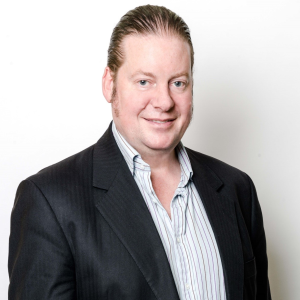 Keynote Speaker: Dr Danny Sullivan Keynote Speaker: Dr Danny SullivanThe shifting sands of confidentiality Danny Sullivan is a consultant psychiatrist, currently Executive Director of Clinical Services at Forensicare, the Victorian public forensic mental health service. In addition he has honorary academic appointments at the University of Melbourne and Swinburne Universities, and provides expert evidence in a range of jurisdictions. Full biography. |
|||
| 1630-1715 | ANZAPPL AGM | |||
| 1715 | Day Concludes | |||
| 1900 till late | 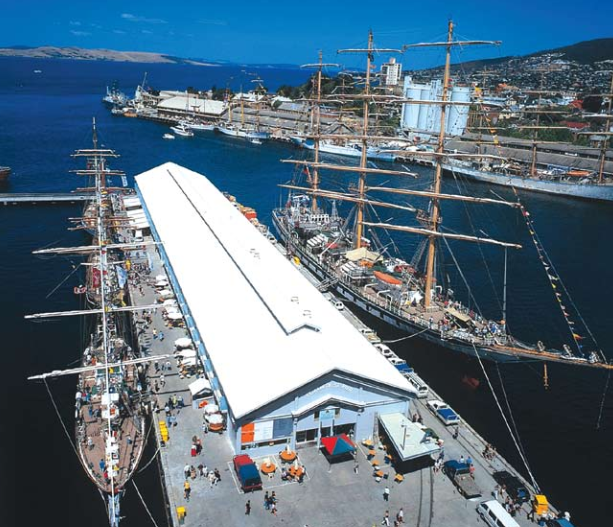 Congress Dinner | Hobart Function Centre Congress Dinner | Hobart Function Centre
It is with great pleasure that the Organising Committee of the 38th Annual Congress invites you to attend the congress dinner at the Hobart Function Centre on the Waterfront, on the evening of Friday 23rd November 2018. The congress dinner is included in the cost of all full registration categories, however you must indicate attendance during registration for catering purposes. Additional tickets may be purchased by Day Delegates and for guests for $115. |
|||
Saturday 24th November 2018
| 0800-1100 | Speakers Preparation Room Open | Mezzanine | |||
| 0800-1300 | Registration Open | Mezzanine | |||
| CONCURRENT SESSION E | ||||
| JUSTICE Grand Ballroom 1 | Chair: Loene Howes |
MENTAL HEALTH Grand Ballroom 2 | Chair: Yvonne Golder |
THERAPY / TREATMENT Grand Ballroom 3 | Chair: Luke Bartlett |
||
| 0900-0925 | The best interests of the child: Dealing better with tensions surrounding dying children Professor Ian Freckelton QC |
Capacity assessment in the NSW Mental Health Act: Are we doing it right? Dr Tim Foley Presented by Christopher Ryan |
Anything is possible: Increasing the odds in forensic therapy – Part 1 Dr Jennifer Wells |
|
| 0930-0955 | Lost and found in translation: Cross-disciplinary conversations between lawyers and clinicians Jo Sampford |
Examining the written word: An audit of psychiatric medical reports in the general hospital setting Dr KC Soh |
Anything is possible: Increasing the odds in forensic therapy – Part 2 Melanie Mitchell, Dr Jennifer Wells |
|
| 1000-1025 | Impostors and impersonators: Fake health practitioners, psychiatry, psychology and the law Professor Ian Freckelton QC |
Oddly dangerous or dangerously odd Dr Mike Jordan, Marita O’Connell |
Treatment pathways among person found not criminally responsible Bob Green |
|
| 1025-1100 | Morning Tea | Mezzanine | |||
| CLOSING PLENARY PANEL | Grand Ballroom 2/3 Chair: Vincenzo Caltabiano |
||||
| 1100-1200 |  Reflections and Future Directions Reflections and Future DirectionsAssociate Professor Troy McEwan, Dr Danny Sullivan, Professor Bernadette McSherry, Professor Megan Davis, Professor Theresa Gannon |
|||
| 1200-1230 | Presidential Handover | Professor Bernadette McSherry & A/Professor Troy McEwan 2019 Congress Handover Closing Remarks |
|||
| 1230 | Lunch | Mezzanine | |||
| Don’t rush off! There’s so much to see and do in Tasmania. Why not book some activities or take a tour round the state? Click here for some suggestions from the committee. |
||||
 |
||||